New Sol-Ark Limitless 12K: A More Affordable Hybrid Inverter for San Diego Homes

Jake Best
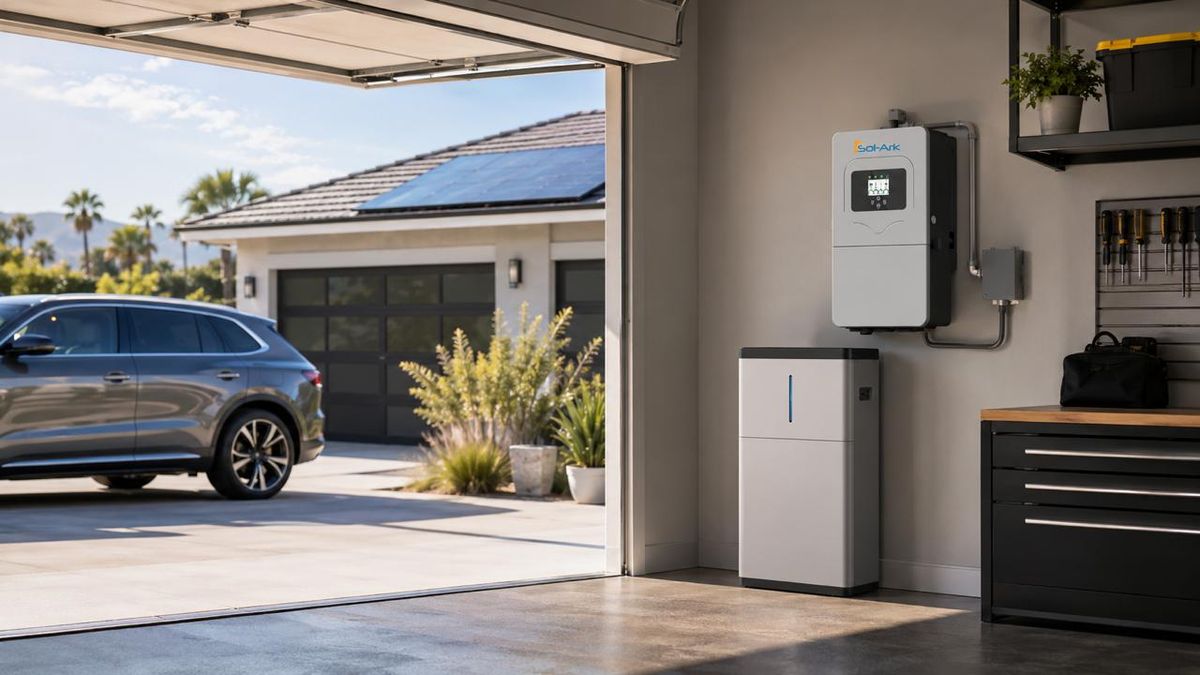
Solar and battery systems do not always need to be oversized—or overpriced—to provide meaningful protection and long-term value.
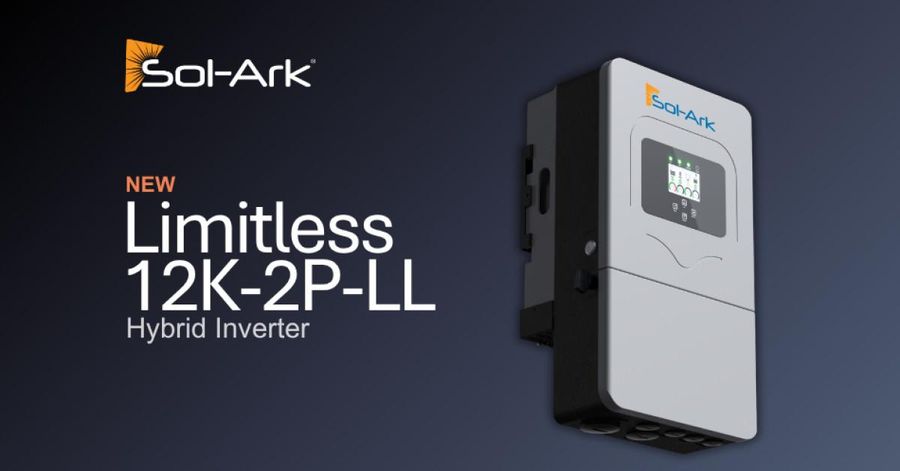
Sol-Ark has introduced the Limitless 12K-2P-LL Hybrid Inverter, a compact and more budget-conscious addition to its residential inverter lineup. At SHS Power, we believe this system could be an excellent fit for many San Diego homeowners who want the flexibility and long-term advantages of a Sol-Ark system without automatically stepping up to the larger 15K or 18K platform.
The Limitless 12K combines solar production, battery storage, backup power, generator support and advanced energy management in one platform. It can deliver up to 12 kW of grid-connected power, along with 10 kW of continuous backup power from batteries. (Sol-Ark)
For the right home, that is a considerable amount of usable power at a more approachable system cost.
What Is a Hybrid Inverter?
A hybrid inverter acts as the control center for a home energy system.
Instead of installing separate equipment to manage solar panels, batteries, utility power and backup loads, a hybrid inverter brings those functions together. It determines where energy should come from and where it should go based on the homeowner’s settings.
Depending on the system design, the inverter can:
- Power the home directly from solar
- Charge batteries using excess solar production
- Use stored battery energy when utility rates are highest
- Keep selected or whole-home loads operating during an outage
- Import lower-cost utility power to charge the batteries
- Export power when permitted and financially beneficial
- Start and use a compatible standby generator
That flexibility is especially valuable in San Diego, where the time at which energy is produced or consumed can be nearly as important as the total amount of energy used.
Why SHS Power Sees a Strong Fit for San Diego Homes
The larger Sol-Ark 15K and 18K hybrid inverters remain great choices for homes with large electrical loads, extensive solar arrays or more demanding backup requirements.
However, not every home needs that much inverter capacity.
Many San Diego homes can be effectively supported by a properly designed 10 kW battery-backup output and roughly 20-45KWH of storage—particularly when the system is configured around the homeowner’s actual priorities.
The Limitless 12K can support loads such as:
- Refrigerators and freezers
- Lighting and general outlets
- Internet and home-office equipment
- Furnace blowers
- Mini-split air-conditioning systems
- Kitchen appliances
- Well pumps
- Selected larger electrical loads
Sol-Ark specifically positions the inverter for budget-conscious residential projects while retaining advanced energy-management and backup capabilities. (Sol-Ark)
It is important to understand that 10 kW of continuous battery-backed output does not guarantee that every appliance in every home can operate simultaneously. Homes with multiple central air conditioners, electric resistance heating, large pool equipment or several high-demand appliances may require load management or a larger inverter.
SHS Power evaluates the home’s electrical loads before recommending a system. Our goal is not to sell the largest inverter available. It is to install the right inverter for the property, the homeowner’s priorities and the available budget.
Strong Solar Capacity Without Oversizing the Inverter
The Limitless 12K can accept up to 19.2 kW of rated DC solar capacity, with three maximum power point trackers and two solar strings available per tracker. Its maximum usable combined MPPT power is rated at 12 kW.
That gives system designers considerable flexibility when working with:
- Multiple roof orientations
- East-, south- and west-facing arrays
- Roof sections with different shading conditions
- Larger arrays designed to improve morning and afternoon production
- Homes that may add solar panels later
The ability to connect a larger nameplate solar array does not mean the inverter will convert more than its rated output at one time. Instead, thoughtful DC oversizing can help the system reach useful production levels earlier in the morning, maintain them longer in the afternoon and perform better during less-than-perfect weather.
For San Diego homeowners, that can be more valuable than designing only around a brief midday production peak.
A Good Option for New Solar and Existing Systems
The Limitless 12K supports both DC-coupled and AC-coupled solar.
A new solar installation will commonly connect the solar panels directly to the Sol-Ark inverter through DC coupling. This gives the inverter direct control over solar production and battery charging.
For a home with an existing solar system, AC coupling may allow the homeowner to retain an existing compatible solar inverter or microinverter system while adding Sol-Ark battery storage and backup capabilities.
The inverter’s multifunction generator port can be configured for:
- A generator input
- Up to 14 kW of AC-coupled solar
- A controllable smart load, such as an appropriately designed EV-charging circuit
That versatility makes the platform useful for both new installations and carefully designed retrofit projects. (Sol-Ark)
Compatibility, code requirements and backup behavior must still be evaluated for every existing solar system. AC coupling is not a universal plug-and-play solution, especially when older equipment or unusual system configurations are involved.
Battery Choice Is One of Sol-Ark’s Biggest Long-Term Advantages
One reason SHS Power continues to recommend Sol-Ark is its 48-volt battery architecture.
Rather than locking the homeowner into a single proprietary battery model, Sol-Ark works with numerous certified battery manufacturers. Sol-Ark says its residential inverter platform supports more than 25 battery suppliers and partners, with various options offering closed-loop communication and UL 9540 certifications. (Sol-Ark)
This gives homeowners greater flexibility when choosing:
- Battery capacity
- Indoor or outdoor equipment
- Wall-mounted or cabinet-style batteries
- Price point
- Warranty
- Future expansion options
- Replacement equipment years from now
Battery technology is evolving quickly. A flexible 48-volt platform may make it easier to service, expand or update the storage system in the future without replacing the entire energy platform.
That is a meaningful long-term benefit—and one of the areas where a lower initial price does not have to mean sacrificing future options.
Designed Around San Diego’s Time-of-Use Rates
A battery system is not only for power outages and is really a second thought for most people.
When correctly programmed, the Limitless 12K can use multi-season time-of-use settings to decide when batteries should charge, discharge or hold energy in reserve. It also supports self-consumption, peak shaving, grid interaction and virtual power plant functionality.
For San Diego homeowners, this can help the system:
- Power the home with solar during the day.
- Store excess solar instead of immediately exporting all of it.
- Discharge the battery during higher-cost evening periods.
- Preserve a selected backup reserve for outages.
- Charge from the grid during lower-cost periods when that strategy makes financial sense.
The ideal programming depends on the customer’s utility rate, solar agreement, battery capacity, household consumption and backup priorities.
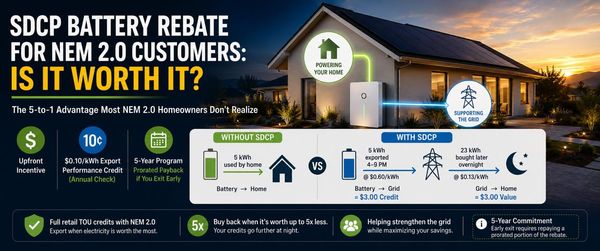
This is a massive win for NEM 1.0 and 2.0 customers that are getting hammered by SDGE’s time of use changes. Most customers and installers didn’t see this coming 4-15 years ago when they originally installed a solar system. Now turn the game on SDGE and give them a taste of their medicine with your own battery storage.
There is no single setting that is right for every home. SHS Power designs and commissions each system around how that specific homeowner uses electricity.
Built-In Backup and Load Management Features
The Limitless 12K includes a 100-amp grid passthrough, allowing up to 100 amps to pass from the utility to the connected load side when grid power is available. During an outage, battery and solar output remain subject to the inverter’s backup ratings.
The system also provides:
- A rated five-millisecond backup transfer time
- Integrated smart-load controls
- Automatic two-wire generator start
- Peak-shaving controls
- Wi-Fi, Bluetooth and wired LAN communication
- Mobile and web monitoring through MySolArk
- An outdoor-rated IP65/NEMA 3R enclosure
- A 10-year manufacturer warranty
The inverter is rated for a 24 kW surge lasting up to 10 seconds at 120/240 volts, which can help with the temporary starting demand of certain motors and appliances. Actual load-starting performance still depends on the equipment, battery capability and complete system design.
Does the Limitless 12K Provide Whole-Home Backup?
It can—but that does not mean it should automatically be marketed as whole-home backup for every property.
A smaller or efficient home may be able to operate most of its normal loads within the inverter’s capacity. A larger home may need:
- A dedicated backup-load panel
- Smart load controls
- HVAC management
- EV-charger control
- Automatic load shedding
- A generator for extended outages
- A larger Sol-Ark inverter
The correct approach is to identify which loads matter most and design around them.
For one homeowner, the priority may be keeping the refrigerator, lights, internet and a mini-split operating. Another homeowner may want central air conditioning, a well pump, pool equipment and nearly every circuit in the house backed up.
Those are very different electrical requirements.
Limitless 12K vs. Sol-Ark 15K
The Limitless 12K is not intended to make the Sol-Ark 15K obsolete. It fills a different role.
The Limitless 12K may be a better fit when:
- Keeping the project within budget is a major priority
- The home has moderate backup-power requirements
- The homeowner wants a flexible 48-volt battery system
- The planned solar array fits comfortably within its design limits
- Large loads can be managed or excluded during an outage
- The customer wants Sol-Ark features without paying for unused inverter capacity
The Sol-Ark 15K may be preferable when:
- The home has larger continuous electrical loads
- More backup output is needed
- The homeowner wants greater whole-home capability
- Multiple large appliances may need to operate at once
- The solar and storage system will be expanded substantially
- Additional inverter headroom is worth the higher project cost
SHS Power can model both options and explain where spending more creates a real benefit—and where it does not.
Start Smaller Today and Expand as Your Home Changes
One of the biggest advantages of choosing a Sol-Ark platform is that the system does not have to be designed only around how your home uses electricity today.
A properly planned system can allow a homeowner to start with one Limitless 12K inverter and expand the system in the future by adding additional compatible inverter capacity, battery storage and solar production. Final expansion options depend on Sol-Ark’s approved configurations, the original electrical design, available service capacity and the equipment installed at that time.
This matters because a home’s energy needs rarely stay the same forever.
A homeowner may eventually:
- Build an accessory dwelling unit
- Add a pool or electric spa
- Replace gas appliances with electric appliances
- Install a heat-pump water heater
- Add central air conditioning or additional mini-splits
- Purchase one or more electric vehicles
- Add an EV charger with higher power requirements
- Expand the solar array
- Want more battery capacity and longer outage protection
Instead of paying for the largest possible system on day one, many homeowners may be able to begin with a system that fits their current home and budget. If their electrical demand grows, SHS Power can evaluate adding a second inverter, additional batteries, more solar panels or improved load-management equipment.
This approach can lower the initial cost while preserving a path toward a larger and more capable home-energy system.
Future-Proofing Against More Than Power Outages
Future-proofing is not only about adding more equipment. It is also about maintaining control as utility rates and rate structures change.
SDG&E can change the value of electricity depending on the season, time of day and customer rate plan. A Sol-Ark system gives homeowners the ability to adjust when their batteries charge, when they discharge, how much backup energy they reserve and when the home imports or exports electricity.
That means the system can be reprogrammed as utility pricing changes rather than being permanently designed around today’s rates.
If SDG&E makes daytime solar exports less valuable, the homeowner may choose to store more energy. If evening electricity becomes more expensive, the batteries can be programmed to discharge during that period. If a future rate plan offers a lower overnight charging price, the system may be able to take advantage of it.
No inverter can guarantee protection from every future utility policy, but a flexible hybrid platform gives homeowners more tools to respond.
Combined with the ability to add batteries, solar capacity and potentially a second inverter as the home grows, the Limitless 12K offers something many homeowners value: the ability to start within a reasonable budget without designing themselves into a corner.
At SHS Power, we see that as one of the Limitless 12K’s most important long-term advantages.
California Certification and Proper System Design
Sol-Ark’s current datasheet identifies the Limitless 12K as CEC-listed, and lists compliance with standards including UL 1741, IEEE 1547-2018 and California Rule 21-related power-control requirements. Final eligibility should always be confirmed against the current California Energy Commission equipment lists when a project is designed and submitted.
Every grid-connected solar and battery product installed by SHS Power must be approved for the intended California application.
The inverter is only one part of a compliant energy-storage system. Battery pairing, rapid shutdown, disconnecting means, equipment clearances, fire-code requirements, utility interconnection and permitting must all be considered.
Our Take: A Practical Middle Ground
The new Sol-Ark Limitless 12K occupies an important space in the market.
It offers many of the features homeowners associate with Sol-Ark:
- Flexible battery selection
- Solar and battery integration
- Grid and off-grid operating modes
- Time-of-use programming
- Generator support
- AC- and DC-coupled solar
- Smart-load management
- Expandability
- Nonproprietary long-term flexibility
But it packages those capabilities into a smaller and more affordable platform.
For many San Diego homes, that may be the sweet spot: enough power to provide meaningful backup and utility-bill control without paying for inverter capacity the homeowner is unlikely to use.
The key is good design. Battery capacity, solar production, inverter output and household loads all need to work together.
Is the Sol-Ark Limitless 12K Right for Your Home?
SHS Power designs custom solar and battery systems throughout San Diego County. We can evaluate your electrical usage, existing solar equipment, backup priorities and future plans to determine whether the Limitless 12K, Sol-Ark 15K or another platform offers the best value.
Our recommendations are based on what your home actually needs—not simply the largest system we can sell.
Contact SHS Power to request a custom solar and battery evaluation.
SHS Power
San Diego Solar and Battery Installation Specialists
Veteran Owned and Operated
Get More SHS Power Updates
New solar, battery, and backup-power articles delivered occasionally.