SDG&E Adds 171 MW of Battery Storage—But What Does It Mean for San Diego Homeowners?

Jake Best

San Diego Gas & Electric has completed two large-scale battery energy storage facilities designed to strengthen California's electric grid and make better use of the state's growing supply of renewable energy.
The projects include the 131-megawatt Westside Canal Energy Storage Facility in Imperial Valley and the 40-megawatt Fallbrook Energy Storage Facility in North San Diego County. Together, the two facilities provide 171 megawatts of power capacity and can reportedly supply nearly 130,000 homes with electricity for approximately four hours. The facilities entered commercial operation in May and June 2023.
Although these projects began operating in 2023, they remain a useful example of where California's electric grid is headed—and why battery storage has become such an important part of the state's energy strategy.
Why Is SDG&E Building Large Battery Facilities?
California produces a significant amount of solar energy during the middle of the day. Unfortunately, electricity production and electricity demand do not always happen at the same time.
Solar production is generally strongest during daylight hours, while electricity demand often increases later in the afternoon and evening as people return home, turn on air conditioning, prepare meals and charge electric vehicles.
When renewable energy production exceeds demand, grid operators may have to reduce—or curtail—solar and wind generation to keep the electric grid balanced.
Large battery facilities help address this mismatch by:
- Charging when renewable electricity is plentiful
- Storing energy that might otherwise be curtailed
- Discharging electricity during higher-demand periods
- Supporting grid reliability during heat waves and other extreme conditions
- Reducing some dependence on conventional power plants during peak demand
The projects participate in energy markets managed by the California Independent System Operator, commonly known as CAISO. This allows stored electricity to be dispatched when it is needed to help balance supply and demand across the grid.
Inside the Westside Canal and Fallbrook Facilities
The Westside Canal project is the larger of the two installations. Located in Imperial Valley, it consists of more than 800 cubes of stacked lithium-ion batteries spread across approximately 16 acres.
At 131 megawatts, Westside Canal became the largest storage asset in SDG&E's utility-owned energy storage portfolio when it entered commercial operation.
The 40-megawatt Fallbrook facility uses a similar arrangement of lithium-ion battery units and became the second-largest storage project in SDG&E's portfolio at the time.
According to SDG&E, both facilities include remote monitoring, automation and safety systems. The battery units are designed to shut down automatically when smoke or other abnormal conditions are detected.

Utility-Scale Batteries Are Good for the Grid
Projects like these are an important step forward for California.
Utility-scale energy storage can help stabilize the grid, reduce renewable-energy curtailment and move daytime solar energy into the evening hours when electricity demand is higher.
That is especially important as California adds more solar generation and experiences periods of extreme heat, drought and increased stress on the electric system.
However, there is an important distinction between a battery owned by the utility and a battery installed at your home.
The SHS Power Take: Grid Storage Does Not Replace Home Storage
SDG&E's battery facilities may support the regional electric grid, but they do not directly provide individual homeowners with backup power, energy independence or control over when they purchase electricity.
A utility-scale battery cannot keep your refrigerator, lights, internet, air conditioning or medical equipment running when the power goes out at your house. It also does not prevent your home from purchasing electricity during expensive evening rate periods.
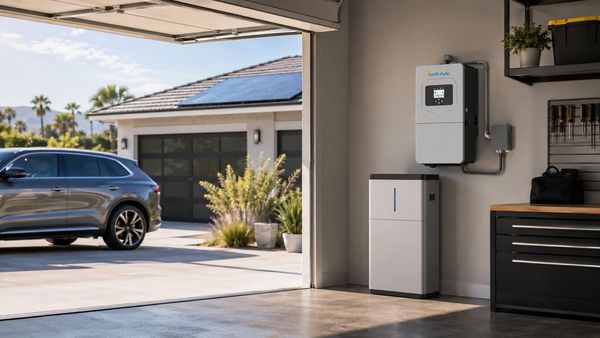
That is where a properly designed home solar and battery system serves a different purpose.
A residential battery can allow a homeowner to:
- Store excess solar energy produced during the day
- Use stored energy during expensive evening hours
- Reduce the amount of electricity purchased from the grid
- Maintain power to selected or whole-home loads during an outage
- Charge the battery when electricity is inexpensive and use it when rates are higher
- Gain greater visibility and control over household energy consumption
Utility batteries protect and balance the larger electric grid. A home battery helps protect and manage the individual home.
California needs both.
Why This Matters Under NEM 3.0
Battery storage has become increasingly important for California homeowners under the current Net Billing Tariff, commonly referred to as NEM 3.0.
Under NEM 3.0, solar electricity exported to the grid during many daytime hours may be credited at a much lower value than the retail price a homeowner pays to buy electricity later.
That means homeowners generally receive more value by storing their excess solar production and using it themselves instead of immediately sending it to the grid.
Without a battery, a solar system may export a large portion of its production during the day and then require the homeowner to purchase electricity back from the utility during more expensive evening hours.
A battery changes that energy flow:
Solar panels produce the electricity. The battery determines when the homeowner gets to use it.
Homeowners Should Build Their Own Energy Strategy
SDG&E's investment in large-scale storage demonstrates something the energy industry already understands: solar generation becomes significantly more useful when it is paired with battery storage.
The same principle applies at the residential level.
Homeowners should not assume that additional utility infrastructure will provide backup power or automatically lower their individual electric bills. Those facilities are designed to serve the grid as a whole.
A home solar and battery system is designed around the homeowner.
The right system should consider:
- The home's hourly energy usage
- Current and future electric rates
- Solar production by time of day
- Air-conditioning and electric-vehicle loads
- Desired outage protection
- Available battery capacity and output
- Whether the goal is savings, backup power or both
Simply installing the largest system is not always the answer. The equipment must be properly sized and programmed around how the household actually uses energy.
Take Control of Your Home's Energy
Large battery projects are helping California modernize its electric grid. But homeowners who want direct protection from outages and rising peak electricity costs still need an energy strategy of their own.
SHS Power designs and installs custom solar and battery systems for homeowners throughout San Diego County. We evaluate the home's actual consumption, rate structure, existing solar equipment and backup-power goals before recommending a system.
The grid may be getting its own batteries.
The question for homeowners is whether their home should have one too.
Contact SHS Power to discuss solar, battery storage, rate optimization or adding a battery to an existing solar system.
SHS Power
San Diego Solar and Battery Installation Specialists
Veteran Owned and Operated
Get More SHS Power Updates
New solar, battery, and backup-power articles delivered occasionally.