OhmConnect Is Shutting Down: The End of a Great Opportunity for California Battery Owners

Jake Best
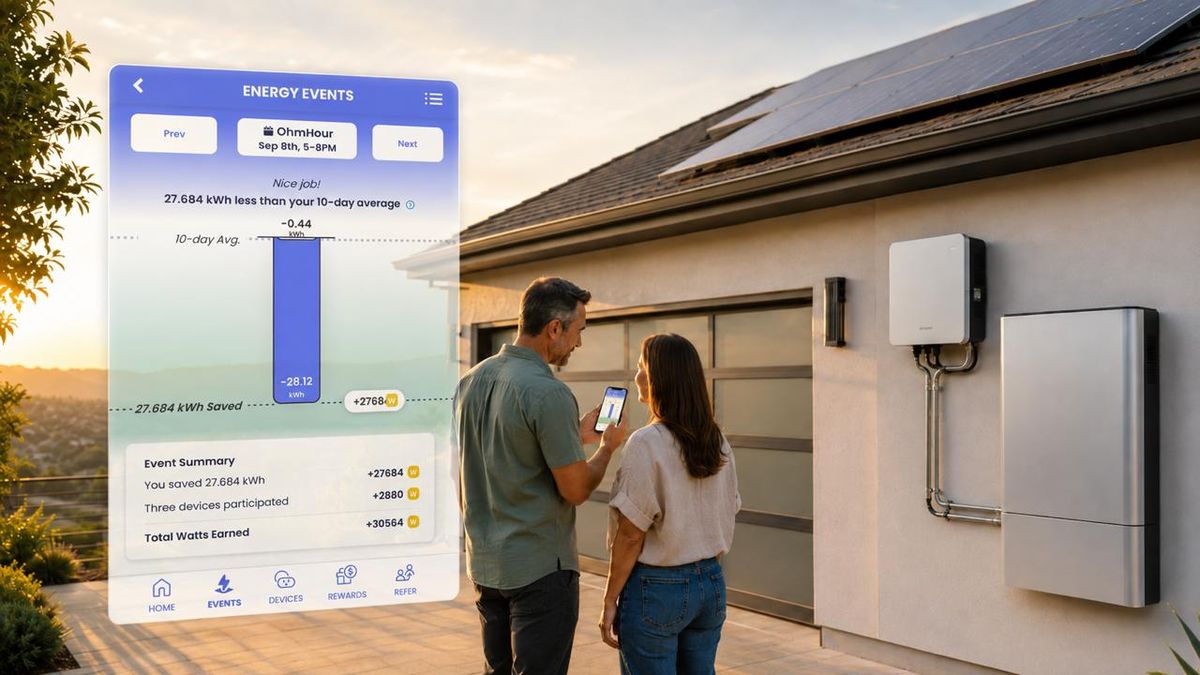
After ten years of helping California homeowners support the electrical grid and earn cash rewards, OhmConnect has announced that its platform is shutting down.
This is a sad day for SHS Power customers who were taking advantage of the program. OhmConnect provided a rare opportunity for homeowners to do more than lower their electric bills. With the right battery system, hybrid inverter and programming strategy, customers could send stored energy back to the grid during periods of high demand and receive significant cash payouts.
OhmConnect says customers may continue receiving OhmHours and AutoOhms through September 2026. However, all remaining rewards must be redeemed by October 31, 2026.
Important: Withdraw Your OhmConnect Rewards Now
SHS Power is advising every OhmConnect customer to log into the platform and withdraw or redeem all remaining rewards as soon as possible.
Do not assume you will remember to do it later.
Even though the current redemption deadline is October 31, 2026, we recommend taking care of it now. Customers with larger balances may also experience additional processing or approval time. OhmConnect states that withdrawals exceeding $100 may require manual approval and can take up to five days.
Before closing the platform, make sure you:
- Log into your OhmConnect account
- Review your available Watts and rewards
- Redeem the remaining balance for cash or available rewards
- Confirm that the withdrawal was successfully submitted
- Save a screenshot or confirmation for your records
Once the platform is closed, there may not be another opportunity to recover rewards that were left in the account.
How OhmConnect Worked
OhmConnect scheduled events known as OhmHours during periods when demand on California’s electrical grid was particularly high.
For a typical customer, participating might have meant turning off appliances, adjusting the thermostat or delaying electricity use until the event was over. OhmConnect compared the home’s actual grid usage during the event with its forecasted usage and rewarded the customer for reducing demand.
However, homeowners with controllable battery systems could take the strategy much further.
How SHS Power Customers Maximized OhmHours
Hybrid inverters such as Sol-Ark, EG4 and now certain EcoFlow systems give homeowners greater control over when their batteries charge, discharge and export energy.
During an OhmHour, a properly configured system could be programmed to:
- Stop pulling electricity from the utility.
- Power the home from its batteries.
- Export additional stored energy back to the electrical grid.
Instead of simply reducing consumption by turning off a few appliances, the home could transition from being a grid consumer to a grid power source.
For example, consider a home that normally draws 4 kW during the evening. When an OhmHour begins, its batteries begin powering the house while the inverter simultaneously exports 15 kW.
The potential change measured at the utility meter could be:
4 kW of avoided consumption + 15 kW of battery export = a 19 kW meter swing
The customer’s actual credit depended on OhmConnect’s baseline calculation, utility data, event rules and the system’s approved export configuration. However, battery export created substantially more earning potential than simply turning off household loads.
Approximately $1.58 per Kilowatt-Hour
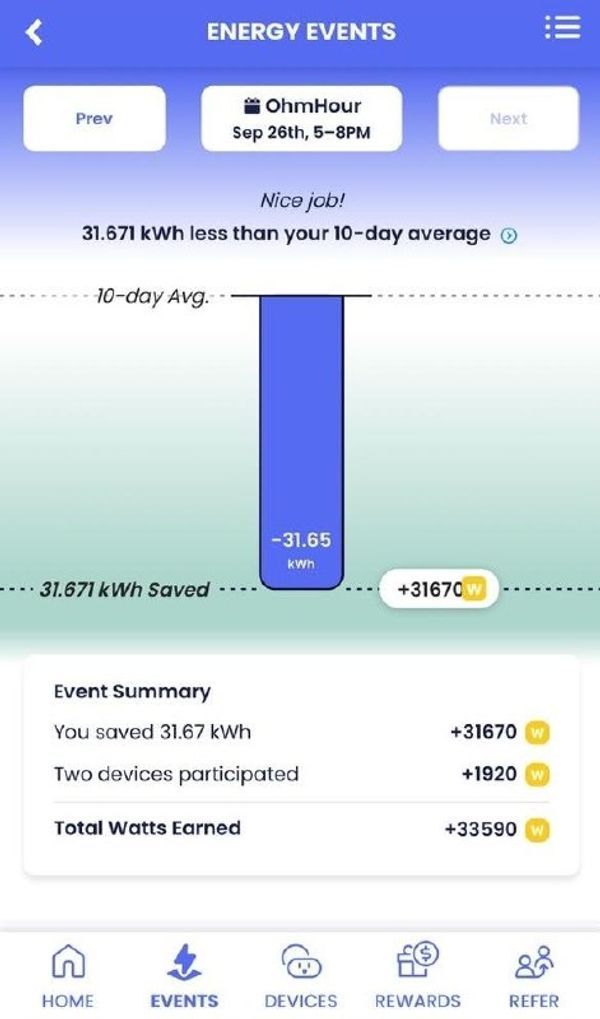
For qualifying participation, customers could receive approximately $1.58 for each measured kilowatt-hour during eligible events.
There were roughly 120 potential OhmHour event-hours during an active year, although the number and duration of events could vary.
At $1.58 per kWh, the earning potential of a large hybrid inverter could add up very quickly.
Sol-Ark 15K Earnings Example
A Sol-Ark 15K can deliver a substantial amount of power quickly when paired with adequate battery storage and an appropriately approved system.
If it exported an average of 15 kW during 120 one-hour events:
15 kW × 120 hours = 1,800 kWh
1,800 kWh × $1.58 = $2,844 in potential annual rewards
That calculation only illustrates the value of the battery export. It does not include the additional measured reduction created by eliminating the home’s normal grid consumption during the event.
Sol-Ark 18K Earnings Example
Using the same simplified calculation for a larger 18 kW inverter:
18 kW × 120 hours = 2,160 kWh
2,160 kWh × $1.58 = $3,412.80 in potential annual rewards
A larger inverter could send more power to the grid in a shorter period, but only when it had enough battery energy available to support that output.
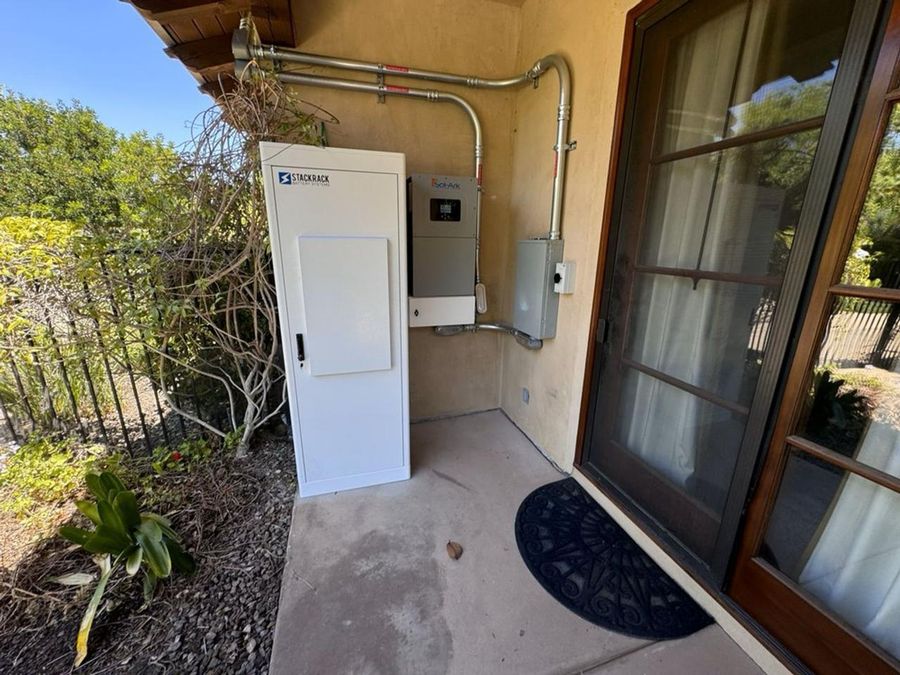
The Real Opportunity Was Exporting Power
Most homes with properly programmed battery systems would already be close to net-zero grid consumption during an OhmHour.
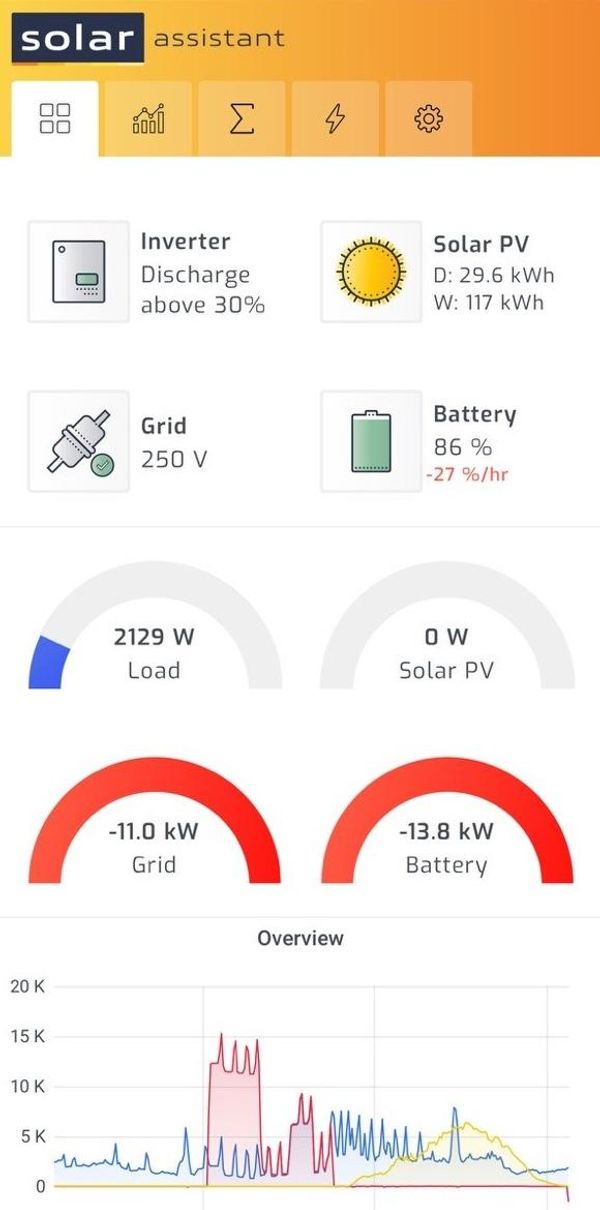
The batteries would power the house, allowing the homeowner to avoid pulling electricity from the utility during the event. While that helped reduce stress on the grid, simply reaching zero consumption did not create the same reward opportunity as actively sending power back to the grid.
The real advantage came from programming the system to export stored battery energy during the event.
Instead of the utility meter showing zero grid usage, the meter could show the home sending 10, 15 or even more kilowatts back to the grid. That exported energy created the additional measured reduction that made programs such as OhmConnect especially valuable for owners of larger hybrid inverters and battery banks.
For qualifying events, exported energy could earn approximately $1.58 per kilowatt-hour in cash rewards through OhmConnect.
NEM 2.0 customers had an additional advantage.
During high-priced time-of-use periods, exported battery energy could also receive utility bill credits that were often worth approximately $0.50 to $0.70 per kilowatt-hour, depending on the customer’s rate plan, season and event timing.
That meant the same exported kilowatt-hour could potentially create value in two different ways:
- OhmConnect cash reward: approximately $1.58 per kWh
- NEM 2.0 utility export credit: approximately $0.50 to $0.70 per kWh
The OhmConnect reward was paid as cash. The NEM 2.0 export value appeared as a credit on the customer’s utility account.
Those utility credits could help offset electricity purchased later in the year when solar production was lower. They could also help cover increased consumption from a new electric vehicle, heat-pump system, spa, accessory dwelling unit or other future electrical load.
Battery Capacity Determined How Long You Could Export
Inverter power and battery capacity perform two different jobs.
The inverter determines how quickly energy can be delivered. The battery determines how long that power can be sustained.
For example, exporting 15 kW for one full hour requires approximately 15 kWh of available battery energy. Additional stored energy would also be needed to continue powering the house and preserve any desired outage reserve.
A customer with approximately 16 kWh of storage might be able to perform a short, aggressive export. A customer with 32, 48 or more kWh of storage could sustain higher output for longer while continuing to support the home.
The strategy depended on coordinating:
- Inverter output
- Usable battery capacity
- Household electricity consumption
- Battery state of charge
- Backup-reserve settings
- Event length
- Utility export limits
- Interconnection requirements
This was not as simple as installing a battery and turning on an app.
Few Installers Knew How to Execute the Strategy
SHS Power was one of the relatively few San Diego installers actively designing and programming battery systems to take advantage of programs like OhmConnect.
The installer needed to understand how the utility measured consumption, how the program established the customer’s baseline, how much power the inverter could export, how long the batteries could sustain that output and how to preserve enough capacity for the homeowner’s needs.
Many solar companies install equipment using basic manufacturer settings and never revisit the system after commissioning. That may be enough for simple backup power, but it can prevent the homeowner from benefiting from advanced rate-management and grid-participation opportunities.
At SHS Power, we believe a modern battery system should do more than keep the lights on during an outage.
It should give the homeowner meaningful control over:
- When energy is stored
- When stored energy is used
- When energy is exported
- How much backup reserve is maintained
- Which utility rate periods are avoided
- How the system responds to changing electricity rates
- Which alternative energy programs the homeowner can access
OhmConnect was a perfect example of why that control matters.
OhmConnect Is Done, but Other Opportunities Will Come
OhmConnect had a great run, and we are disappointed to see the platform close.
However, the need for residential battery support is not disappearing. California continues to experience periods when grid demand is high and stored energy is especially valuable.
We do not yet know which specific program will become the next major opportunity for homeowners. It may come from a utility, a community choice energy provider, a virtual power plant operator or another third-party energy company.
What we do know is that additional opportunities will emerge.
When they do, homeowners with flexible, controllable equipment will be in a much better position to participate.
Your Equipment Choice Determines Your Future Options
The closure of OhmConnect reinforces one of the most important lessons in battery-system design:
The equipment you choose today determines which opportunities you may be able to access tomorrow.
Some battery systems provide only limited operating controls. Participation in a future program may depend entirely on whether the manufacturer chooses to support that specific program.
Flexible hybrid platforms can give the homeowner and installer greater control over charging, discharging, exporting and expanding the system.
No installer can guarantee which incentives or grid programs will exist five or ten years from now. What SHS Power can do is design a system that preserves as much flexibility as possible.
That may include:
- Expandable battery storage
- Adjustable charging and discharging schedules
- Configurable export limits
- Time-of-use programming
- Generator integration
- Local system controls
- Third-party monitoring
- The ability to adapt to future utility-rate changes
OhmConnect is shutting down, but the concept behind it is not going away.
As electric rates become more complicated and California depends more heavily on distributed battery storage, homeowners with flexible and properly designed systems will be in the best position to benefit from whatever opportunity comes next.
Need Help With Your Existing Battery System?
SHS Power designs, installs and programs solar and battery systems around more than today’s electric bill. We consider backup power, utility-rate optimization, system expansion and future grid-participation opportunities.
When possible, we prioritize equipment that gives homeowners real control over their energy instead of locking them into a single operating strategy.
For assistance evaluating an existing system or designing a new solar and battery project, contact SHS Power through our website or call our main office.
SHS Power
San Diego Battery Installation Specialists
Veteran Owned and Operated
Get More SHS Power Updates
New solar, battery, and backup-power articles delivered occasionally.