Cut Your San Diego Gas Bill With a Heat Pump Water Heater

Jake Best
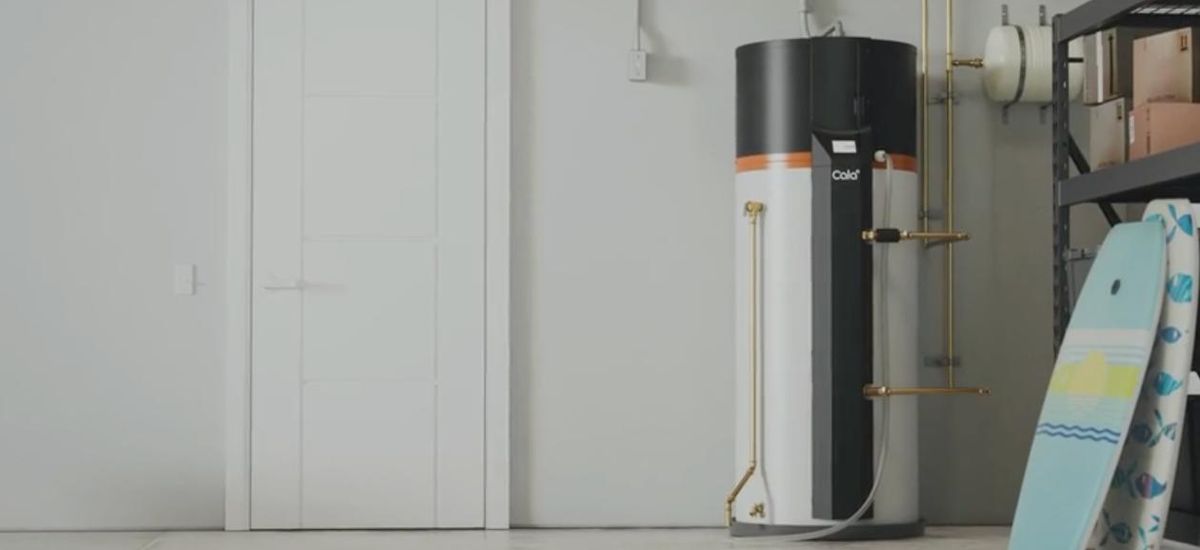
For many San Diego homeowners, the water heater is one of the largest remaining natural-gas appliances in the home.
Even after installing solar panels, homeowners may continue receiving a gas bill every month because their water heater still burns natural gas. Replacing that gas appliance with a heat pump water heater can reduce natural-gas consumption, improve the home's overall efficiency, and allow more of the home's energy needs to be powered by solar.
SHS Power has partnered with Cala Systems, the manufacturer of what we like to call the Rivian of heat pump water heaters.
Cala is not simply an efficient electric water heater. It is an intelligent home-energy appliance designed to learn how your household uses hot water, coordinate with solar production and electricity rates, and prepare hot water before you need it.
Why Water Heating Matters in San Diego
Most homeowners do not think much about their water heater until it stops working. However, heating water requires a meaningful amount of energy every day.
A traditional gas water heater continuously burns natural gas to maintain a tank of hot water. A tankless gas unit avoids some standby losses, but it still depends on natural gas and must produce a large amount of heat whenever someone turns on a shower or faucet.
A heat pump water heater operates differently.
Instead of creating all its heat directly, it collects heat from the surrounding air and transfers that heat into the water. It works similarly to an air conditioner or refrigerator operating in reverse.
Because it moves heat rather than producing it entirely through resistance heating, a heat pump water heater can use dramatically less electricity than a conventional electric water heater. Cala reports that heat pump water heaters can reduce water-heating energy use by approximately 60% to 70% compared with standard electric-resistance water heaters.
For a homeowner replacing a gas water heater, the biggest immediate change is that water heating is removed from the gas bill and moved onto the home's electrical system.
Your gas bill may not disappear entirely if you still have a gas furnace, clothes dryer, range, fireplace or pool equipment. However, removing the water heater can substantially reduce year-round gas consumption because hot water is used during every season.
Why Heat Pump Water Heaters Work Especially Well in San Diego
San Diego's moderate climate is well suited for heat pump technology.
Heat pump water heaters draw warmth from the air around them. In a garage, utility room or other suitable space, they can operate efficiently through most of the year without dealing with the extreme winter temperatures experienced in colder parts of the country.
They also produce a small amount of cool, dehumidified air while operating. In a San Diego garage, that can be a welcome secondary benefit.
Heat pump water heaters do require adequate airflow, condensate drainage and a suitable electrical circuit. Converting from gas will commonly require a new 240-volt circuit, although the exact electrical and plumbing work depends on the home.
This is why the installation should be evaluated as an entire system—not simply as an appliance replacement.
Meet Cala: An Intelligent Heat Pump Water Heater
Most water heaters are reactive. When the tank gets cold, they turn on.
Cala takes a different approach.
Cala learns when your household normally uses hot water and plans ahead. It combines information about water use, electricity prices, weather conditions, solar production and other home-energy systems to determine when and how quickly it should heat the tank.
That distinction is important for San Diego homeowners because when electricity is used can be almost as important as how much electricity is used.
Instead of reheating during an expensive evening period, Cala can prepare hot water earlier in the day when solar production is available or electricity is less expensive.
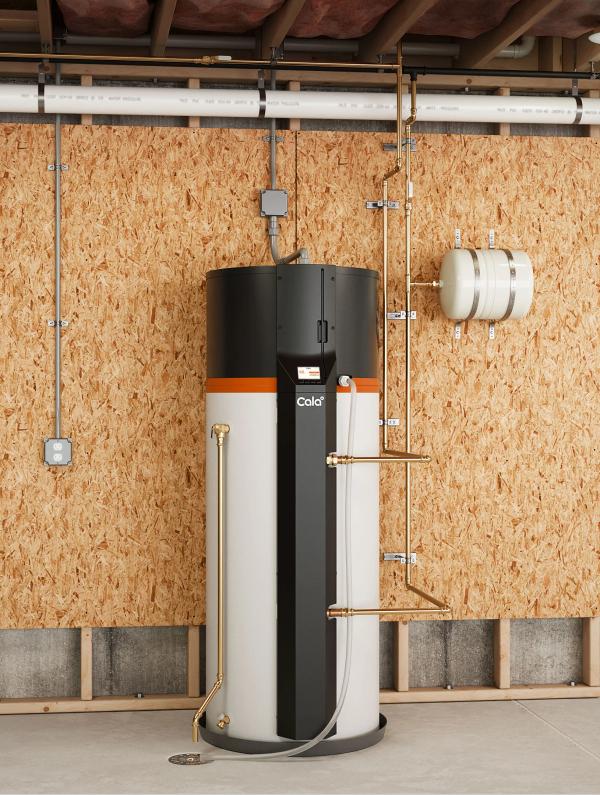
Why We Call Cala the Rivian of Heat Pump Water Heaters
Rivian did not invent the electric vehicle. It approached the electric vehicle as a fully integrated technology platform rather than simply replacing a gas engine with an electric motor.
Cala takes a similar approach to water heating.
It combines a variable-speed heat pump, integrated mixing valve, flow sensor, leak detection, predictive software, connectivity and app-based controls into one coordinated system.
Predictive hot-water management
Cala learns the household's normal hot-water schedule. Rather than maintaining the entire tank at maximum temperature all day, it prepares the amount of hot water the household is expected to need.
It can run more slowly when efficiency is the priority and increase output when the home is likely to need more hot water.
More usable hot water
Cala uses a 65-gallon nominal tank and an integrated mixing valve. Cala states that the design can provide up to 50% more usable hot water when needed by strategically storing hotter water and safely mixing it to the delivery temperature. The unit has a listed first-hour rating of 78 gallons and is designed for households of up to approximately five people.
This helps address one of the most common homeowner concerns about heat pump water heaters: running out of hot water.
Variable-speed operation
A standard water heater generally turns a heating source on or off. Cala's variable-speed compressor can adjust its output based on demand.
That allows the system to operate more gently and efficiently when there is plenty of time before the next expected hot-water demand, while still being able to respond when more capacity is needed.
Integrated leak detection
Cala includes integrated leak detection and tracks both energy use and water consumption. Homeowners can view system information through the Cala app on iOS or Android.
Smart scheduling around electricity rates
Cala can shift water heating toward lower-cost hours rather than operating during the most expensive part of the day.
This is particularly valuable in SDG&E territory, where homeowners may pay very different electricity prices depending on the hour and rate plan.
Storm and outage preparation
Cala can preheat additional water ahead of a possible storm or grid outage. The hot water stored in the tank effectively becomes a form of thermal energy storage.
It does not provide electricity like a home battery, but it can store energy as heat so the household has more usable hot water if power becomes unavailable.
Cala and Solar: A Natural Combination
A traditional gas water heater cannot use electricity produced by your solar panels.
Cala can.
Cala's solar integration is designed to synchronize water heating with expected solar production and household hot-water demand. Its predictive controls can use the home's location, solar-array orientation and local solar forecast to estimate when energy will be available.
That creates several advantages for an SHS Power solar customer.
Use more of your solar energy inside the home
Under newer solar billing structures, exporting electricity to the grid during much of the day may provide substantially less value than using that electricity inside the home.
Cala can heat water while the solar system is producing, converting daytime solar electricity into hot water that can be used later.
In that sense, the water heater acts like a thermal battery:
- Your solar panels produce electricity during the day.
- Cala uses some of that electricity to heat water.
- The insulated tank stores that energy as heat.
- Your family uses the hot water later, including after the sun goes down.
This can be more valuable than exporting the same electricity for a low credit and then buying energy back from the utility at a higher rate.
Reduce dependence on the utility
When water heating is aligned with solar production, less of the water heater's energy may need to come from the grid.
The exact savings depend on the home's solar production, utility rate, hot-water usage, installation location and system settings. However, the basic strategy is powerful: operate a highly efficient appliance when the home is producing its own electricity.
Prepare San Diego homes for future rate changes
Utility rates and solar compensation policies will continue to change.
A system that can adjust when it consumes electricity gives homeowners more flexibility than an appliance that operates on a simple thermostat.
Cala states that its solar controls are intended to increase solar self-consumption and protect the value of a solar investment if net-metering policies change in the future.
Cala, Solar and Battery Storage
Cala also pairs well with an SHS Power solar-and-battery system.
Without intelligent controls, a water heater may begin operating in the evening and draw energy from the battery at the exact time the homeowner is trying to preserve stored power for air conditioning, lighting, cooking or backup protection.
Cala can instead prioritize heating water during daytime solar production or lower-cost hours. This can leave more battery energy available for essential loads and expensive evening periods.
Through Cala's Home Assistant integration, the water heater can receive real-time information about solar output and battery state. For example, it can delay reheating when solar output drops or wait until the home battery reaches a selected state of charge. Cala says these Home Assistant decisions are processed locally on the home network, allowing them to continue even when the internet is unavailable.
For homeowners who want their solar, battery and major appliances to work as one coordinated energy system, this is where Cala becomes especially interesting.
Cala Specifications
Cala's current intelligent heat pump water heater includes:
- 65-gallon nominal tank capacity
- 78-gallon first-hour rating
- 3.76 Uniform Energy Factor
- Variable-speed compressor
- Integrated mixing valve
- Integrated flow sensor
- Integrated leak detection
- Wi-Fi, Bluetooth and LPWAN connectivity
- iOS and Android app support
- ENERGY STAR certification
- 240-volt electrical connection
- 30-amp double-pole breaker requirement
- Approximately 48 dBA listed sound level under Cala's internal test conditions
- Heat-pump operating range of approximately 37°F to 120°F
The unit measures approximately 24 inches in diameter and 67 inches tall, so the installation space must be evaluated carefully.
Warranty Coverage
Cala provides a 10-year warranty on the tank and internal parts.
When the system is installed and registered by a Cala Pro Contractor, Cala lists three years of labor coverage. Its warranty is also transferable to a future homeowner if the property is sold.
Warranty terms and eligibility requirements should always be confirmed at the time of purchase.
Discounts and Incentives
At SHS Power, we currently offer bundled solar and battery installation incentives that can significantly reduce overall project cost. When a heat pump water heater is installed as part of a combined solar and battery system, homeowners may be able to save approximately 30–40% on the total installation cost through available program stacking, utility incentives, and project bundling efficiencies. These savings vary based on system size, site conditions, and current program availability, and are evaluated on a case-by-case basis during the design and proposal process.
Should You Replace a Working Gas Water Heater?
It can make sense to replace a gas water heater before it fails, particularly when:
- The existing unit is approaching the end of its expected service life.
- The homeowner is already installing or expanding solar.
- The home has excess daytime solar production.
- The homeowner wants to reduce natural-gas use.
- A solar or battery project makes it practical to add the required electrical circuit.
- The homeowner wants to electrify the home gradually instead of waiting for an emergency.
- The installation can be coordinated with other electrical or energy-efficiency work.
Water heaters frequently fail without much warning. An emergency replacement can force a homeowner to select whichever product is immediately available, even when a better long-term option exists.
Planning the conversion ahead of time allows SHS Power to evaluate the electrical service, installation area, condensate route, airflow, solar production and future battery plans as one complete project.
Is a Heat Pump Water Heater Right for Every Home?
Not necessarily.
A successful installation depends on several factors:
- Available space and ceiling height
- Adequate airflow or a suitable ducting plan
- Access to a condensate drain
- Electrical-panel capacity
- Distance from the electrical panel
- Household size and hot-water demand
- Location of the existing gas and water lines
- Noise sensitivity
- Solar-system size and expected production
- Utility rate plan
- Whether the home has or plans to add battery storage
Because Cala uses a 65-gallon tank and requires a 240-volt, 30-amp circuit, it may not fit every existing water-heater closet without modification.
SHS Power evaluates these details before recommending the system.
Build a Home That Uses Its Own Energy
Solar panels are only one part of an efficient home.
The next step is making sure the home's major appliances can use solar energy intelligently. A heat pump water heater allows homeowners to replace a year-round gas load with a highly efficient electric appliance. Cala goes further by coordinating that appliance with hot-water demand, solar production, battery storage and electricity prices.
That is why SHS Power has partnered with Cala.
We believe the future of residential energy is not a collection of disconnected products. It is a coordinated system in which solar panels, batteries, electric vehicles, heating, cooling and water heating work together.
For San Diego homeowners, a Cala heat pump water heater can be an important step toward:
- Lower natural-gas consumption
- Greater solar self-consumption
- Reduced exposure to future utility-rate changes
- Smarter use of battery storage
- Better visibility into water and energy usage
- A more efficient, all-electric home
Get a Cala Heat Pump Water Heater Assessment From SHS Power
SHS Power can evaluate your current water heater, electrical panel, solar system and installation space to determine whether a Cala heat pump water heater is a good fit for your home.
We can also explore installing the water heater as part of a larger solar, battery or home-electrification project.
Because we intentionally take on a limited number of projects, we are able to give each system the attention to detail it deserves.
Contact SHS Power to learn more about Cala heat pump water heaters and solar-powered home electrification in San Diego County.
SHS Power
San Diego Solar, Battery and Home Energy Specialists
Veteran Owned and Operated
Get More SHS Power Updates
New solar, battery, and backup-power articles delivered occasionally.